Competitivehs We Created Giants Druid Broke Again Wild
Dragons: A brief history of the mythical, burn down-breathing beasts
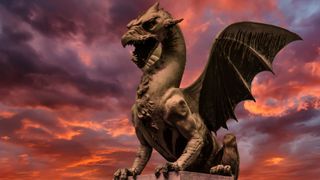
Dragons are amidst the most popular and enduring of the globe's mythological creatures, believed to have been existent for centuries.
Dragon tales are known in many cultures, from the Americas to Europe, and from India to Prc. They accept a long and rich history in many forms and continue to populate our books, films and television shows, as brave heroes routinely fight to slay the beasts.
It's not articulate when or where stories of dragons get-go emerged, but the huge, flying serpents were described at least as early as the age of the ancient Greeks and Sumerians. According to Scott One thousand. Bruce in his introduction to "The Penguin Volume of Dragons" (Penguin Classics, 2021), "In the ancient world they took the form of enormous serpents, ready to crush with their coils and kill with their venomous jiff." For much of history dragons were thought of as beingness like any other mythical animal: sometimes useful and protective, other times harmful and unsafe.
That changed when Christianity spread beyond the world; dragons took on a decidedly sinister interpretation and came to correspond Satan. In medieval times, nigh people who heard annihilation about dragons knew them from the Bible, and information technology'south probable that almost Christians at the fourth dimension believed in the literal existence of dragons. After all, Leviathan — the massive monster described in item in the Book of Chore, affiliate 41 — sounds like a dragon:
"Its back has rows of shields tightly sealed together; each is so close to the next that no air can pass betwixt. They are joined fast to one another; they cling together and cannot be parted. Its snorting throws out flashes of light; its optics are like the rays of dawn. Flames stream from its rima oris; sparks of fire shoot out. Smoke pours from its nostrils as from a boiling pot over burning reeds. Its jiff sets coals afire, and flames dart from its mouth."
Related: Top ten beasts and dragons: How reality made myth
The belief in dragons was based non only in fable simply also in hard evidence, or at least that's what people thought, long ago. For millennia no one knew what to make of the giant bones that were occasionally unearthed around the earth, and dragons seemed a logical pick for people who had no noesis of dinosaurs.

Different types of dragons
Though most people can easily picture a dragon, people's ideas and descriptions of dragons vary dramatically, according to Grunge. Some dragons have wings; others don't. Some dragons can speak or exhale burn; others can't. Some are only a few feet long; others span miles. Some dragons live in palaces nether the body of water, while others can but be found in caves and inside mountains, such as Smaug in JRR Tolkein'south "The Hobbit."
As folklorist Carol Rose's book "Giants, Monsters, & Dragons: An Encyclopedia of Sociology, Legend, and Myth" (Norton, 2001), dragons "have blended features from many other beasts, such as the head of an elephant in India, that of a king of beasts or bird of casualty in the Middle E, or numerous heads of reptiles such every bit serpents. Their body color may range from green, red, and black to unusually xanthous, blue or white dragons."
Zoologist Karl Shuker describes a wide variety of dragons in his volume "Dragons: A Natural History" (Simon & Schuster, 1995), including giant snakes, hydras, gargoyles and dragon-gods, and the more obscure variants such as basilisks, wyverns and cockatrices. At its root, the is a chameleon — its features adapting to the cultural and literary expectations of the era.
Dragons go along to capture the public's imagination in fantasy books and films, appearing in everything from the kid-friendly 2010 film "How to Railroad train Your Dragon," to the more adult-oriented "Game of Thrones" books and Tv set series and "The Hobbit" book and movies. The popular role-playing game Advanced Dungeons and Dragons describes more a dozen varieties of dragons, each with unique personalities, powers and other characteristics. (Black dragons, for instance, are addicted of eels — who knew?)
Origins of dragons
The word "dragon" comes from the ancient Greek give-and-take "draconta," meaning "to watch," suggesting that the beast guards treasure, such as mountains of gold coins or gems, according to Dean Miller in "Legendary Creatures and Monsters" (Cavendish Square Publishing, 2014). Just this doesn't really make sense because a creature as powerful as a dragon surely doesn't need to pay for anything, right? It's probably more of a symbolic treasure, not for the hoarding dragon but instead a reward for the brave warriors, such as the Knights of Camelot who would beat out the evil brute.
Dragons are ane of the few monsters cast in mythology primarily as a powerful and fearsome opponent to be slain. They don't simply exist for their own sake; they exist largely as a foil for bold adventurers. Other mythical beasts such every bit trolls, elves and fairies interact with people (sometimes mischievously, sometimes helpfully) merely their main role is not every bit a combatant.
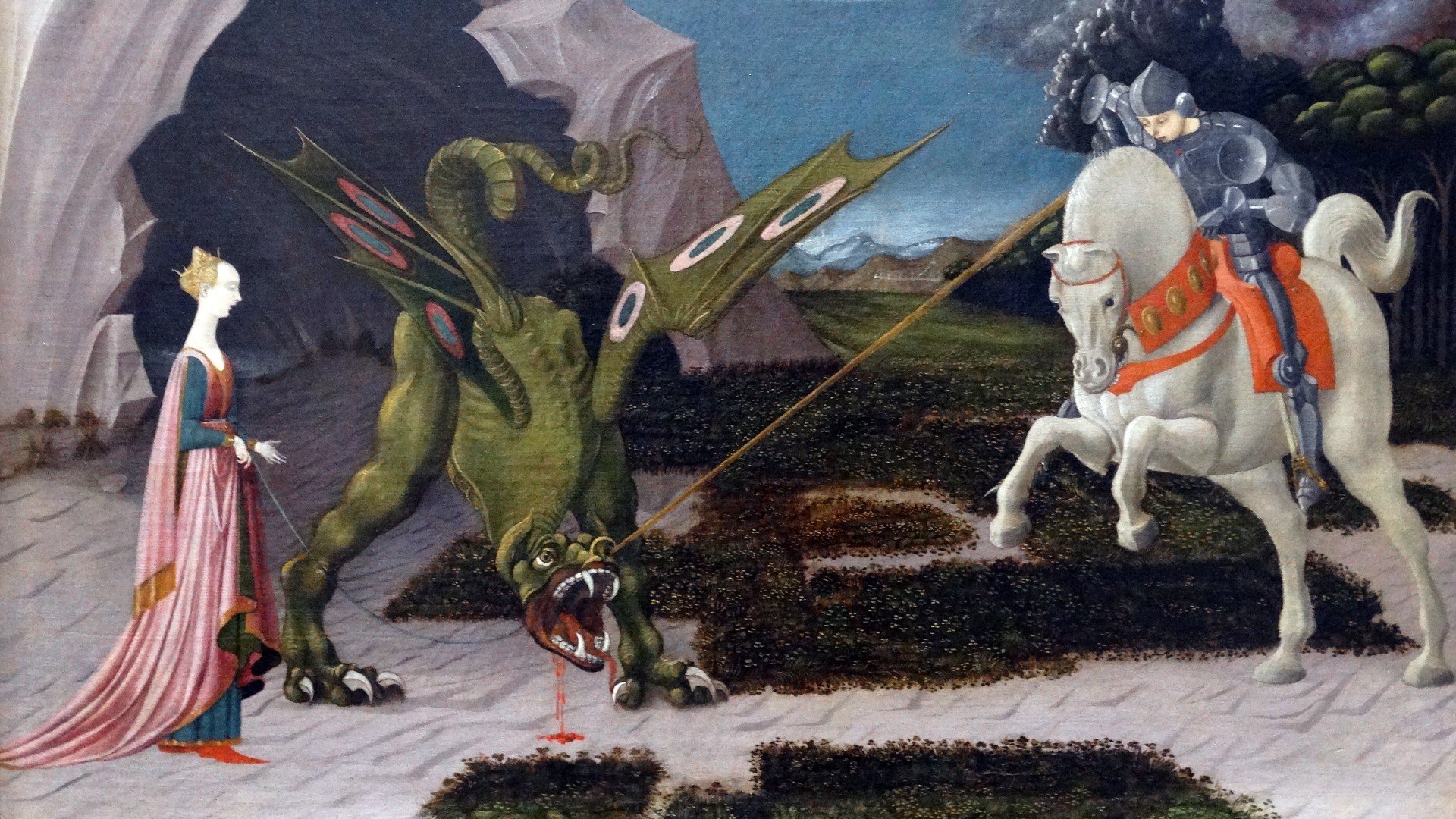
The Christian church created legends of righteous and godly saints battling and vanquishing Satan in the course of dragons. The most celebrated of these was St. George the Dragon Slayer, who in legend comes upon a town threatened by a terrible dragon, co-ordinate to English language Heritage. He rescues a fair maiden, protects himself with the sign of the cantankerous and slays the beast. The town's citizens, impressed past St. George's feat of faith and bravery, immediately convert to Christianity.
Vanquishing a dragon was not only an important career opportunity for any ambitious saint, knight or hobbit, but according to legend it was as well a way to enhance armies. Every bit Michael Page and Robert Ingpen note in their book "Encyclopedia of Things That Never Were"(Viking Penguin, 1987), "The utilize of dragon'southward teeth provides a simple method of expanding the armed forces of any country. It was start practiced past Cadmus, King of Thebes. First, ready a piece of ground every bit though for sowing grain. Next, catch and kill any convenient dragon and describe all its teeth. Sow these in the furrows you lot have prepared, encompass lightly, and stand up well abroad." Easy, peasy, right?
Side by side, veteran warriors "clad in bronze armor and armed with swords and shields ... emerge rapidly from the earth and stand up in ranks according to the mode in which the dragon's teeth were sown." Apparently these draconis dentata soldiers are a quarrelsome lot and will turn on each other lacking a ready enemy, then if yous plan to practice this, be certain your adversaries are nearby.
Scholars believe that the burn down-breathing chemical element of dragons came from medieval depictions of the mouth of hell; for case, art by Dutch painter Hieronymus Bosch, amidst others. The entrance to hell was oft depicted equally a monster's literal mouth, with the flames and smoke characteristic of Hades belching out. If ane believes not only in the literal existence of hell, but also the literal existence of dragons every bit Satanic, the clan is quite logical.
Are dragons real?
Medieval theology aside, few people today believe in the literal being of dragons in the way they may believe in the existence of Bigfoot or the Loch Ness monster, for example. The dragon (or at least the dragon version almost familiar to Westerners) is simply too big and as well fantastic to take seriously or literally. In the modern age of satellite imagery and smart phone photos and videos, it's simply implausible that any giant, winged burn-breathers inhabit Earth's lands or skies unseen.
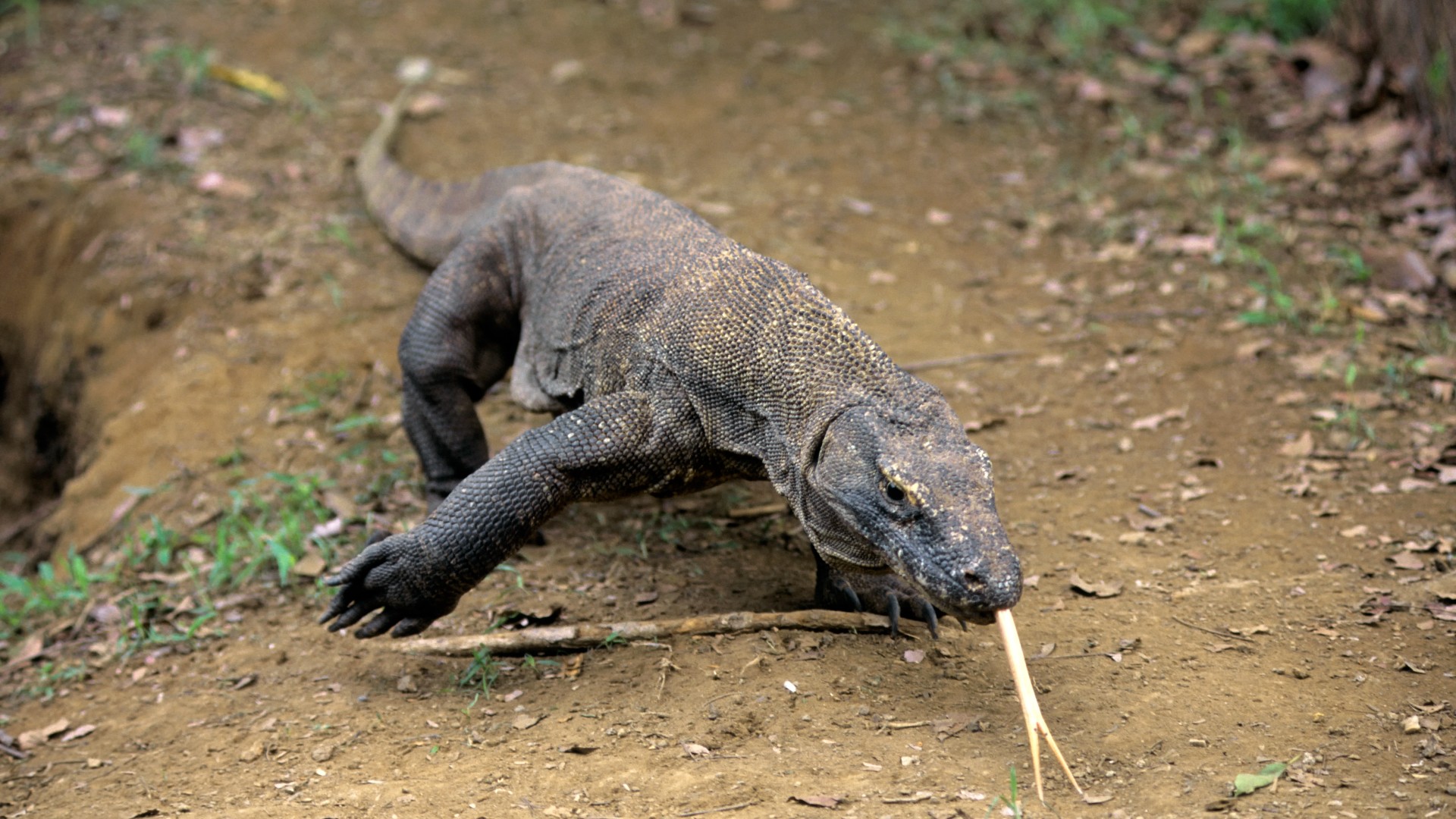
However, simply a few centuries ago rumors of dragons seemed to accept been confirmed past eyewitness accounts from sailors returning from Republic of indonesia who reported encountering dragons — Komodo dragons, a type of monitor cadger — which can be aggressive, deadly, and accomplish 10 feet (3 meters) in length.
In a possible parallel to dragons, it was previously believed that the seize with teeth of a Komodo dragon was peculiarly deadly because of toxic bacteria in its mouth, though that myth was debunked in 2013 past a team of researchers from the University of Queensland who discovered that the Komodo dragon's mouths are no dirtier than those of other carnivores. Western scientists merely verified the existence of the Komodo dragon around 1910 following the investigation of Lieutenant Jacques Karel Henri van Steyn van Hensbroek and Pieter Ouwens, according to The Guardian, but rumors and stories of these fearsome beasts circulated long before that.
Dragons, in one form or another, have been around for millennia. Through epic fantasy fiction past J.R.R. Tolkien and others, dragons have continued to spark our collective imagination and show no sign of dying out.
Additional resource
To find out more near Komodo Dragons, this article from the Academy of Queensland, has a group of researchers discussing the fascinating item of their mouths. To detect more almost the story of St. George, read this entry from the Cosmic Encyclopedia.
Bibliography
- Scott G Bruce, "The Penguin Book of Dragons", (Penguin, 2021)
- Volume of Job, https://www.biblestudytools.com/job/41-one.html
- Joseph A Williams, What Dragons Look Like Around The World, Grunge 2021, https://world wide web.grunge.com/462238/what-dragons-expect-similar-around-the-world/
- Carol Rose, Giants, Monsters, & Dragons: An Encyclopedia of Folklore, Legend, and Myth" (Norton, 2001)
- 9 Things You Didn't Know Nearly St George, English Heritage, https://www.english-heritage.org.uk/visit/whats-on/st-georges-day/9-things-you-didnt-know-about-st-george/
- Michael Page and Robert Ingpen, "Encyclopedia of Things That Never Were" (Viking Penguin, 1987)
- Hannake Meijer, Here Be Dragons: The Meg Yr Journey of the Komodo Dragon, The Guardian, 2017, https://www.theguardian.com/science/2017/may/17/here-be-dragons-the-meg-yr-journey-of-the-komodo-dragon
Source: https://www.livescience.com/25559-dragons.html
0 Response to "Competitivehs We Created Giants Druid Broke Again Wild"
Enviar um comentário